Comparing Supplier Competence and Manufacturing Precision for High-Capacity Slide-Coasters
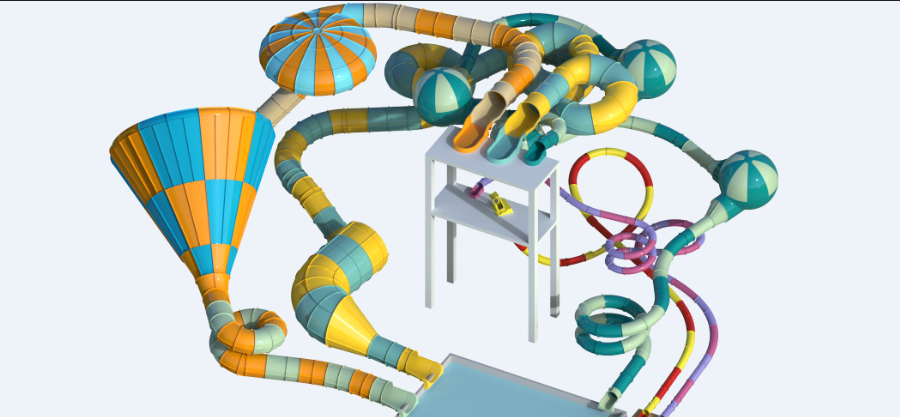
Choosing between suppliers for a high-throughput slide-coaster is a technical comparison as much as a business decision. This comparative insight lays out what separates vendors who deliver reliable throughput from those who create operational headaches. Start with the basics: ask to inspect prototypes, material samples, and proof of past installations of water park equipment. Operators at large parks such as Disney’s Typhoon Lagoon show how layout and component quality influence daily capacity — that real-world anchor makes the stakes clear.
Why supplier competence changes operational reality
Supplier competence is not merely a sales pitch. It covers engineering documentation, test protocols, and the ability to adapt to site constraints. Look for experience in hydraulic modeling and cycle testing; those indicate the supplier understands throughput and rider cadence. A competent supplier will present load testing records, cycle time data, and examples of laminated fiberglass shells that passed long-term UV and chemical exposure checks. Those deliverables reduce rework and downtime.
Manufacturing precision: which parameters actually matter
Precision matters at the millimetre. Critical manufacturing parameters include mold tolerance, gelcoat thickness, resin cure profiles, and consistent surface finish. These affect rider speed, water film behavior, and joint fit at assembly. Monitor flow rate control on pump stations and alignment tolerances at connection flanges — both directly affect throughput. Precision in fabrication also reduces fatigue points in joints and lowers maintenance frequency.
Operational production teardown — comparing approaches
When you request an operational production teardown, compare three deliverables: as-built drawings with tolerances, non-destructive test (NDT) reports for welds or bonded seams, and embedded-component traceability. In a practical teardown you will evaluate {main_keyword} and {variation_keyword} integration into the assembly line. A supplier focused on turn-key fabrication will show cycle-time charts and a documented process for gelcoat application, resin infusion, and post-cure handling. That level of detail separates vendors who can scale throughput from those who cannot.
Common mistakes and practical alternatives
Teams often accept cost-first bids and then discover tolerance slippage during installation — a costly mistake. Another frequent error is neglecting hydraulic harmonization between slides and circulation pumps; mismatched flow rate produces inconsistent rider experience. The sensible alternative is staged validation: prototype test, small-scale pilot, then phased roll-out. Also consider modular sections that permit field-level replacement rather than full rebuilds — less downtime and better lifecycle cost control. — A short aside: field-replaceable liners saved one operator months of closure after early-season delamination issues.
Comparative checklist: supplier claims versus evidence
Use this checklist to compare candidates objectively:- Engineering deliverables: CAD with tolerances, finite element analysis summaries.- Field proof: documented installations, maintenance logs, and uptime percentages.- Material traceability: batch numbers for gelcoat and resin, laminate layup schedules.This checklist prioritizes measurable verification over marketing statements. It will expose gaps quickly.
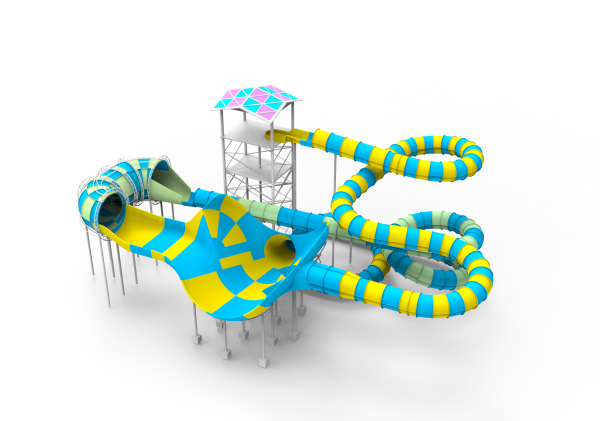 Three golden rules for selection (Advisory)
1) Verify throughput under real loads: require cycle testing that mirrors peak-day operations and demand recorded cycle-time data. 2) Demand precision documentation: ask for mold tolerance sheets, post-cure dimensional reports, and NDT evidence for structural joints. 3) Insist on lifecycle planning: supplier must provide maintenance intervals, spare-part lists, and an agreed mean time to repair (MTTR) for critical components.
When these three metrics are enforced, procurement moves from speculation to control. The result: predictable opening dates, stable daily capacity, and manageable lifecycle costs. Integrating thoughtful layout choices early — consult a specialist in water park layout design — yields better throughput and fewer retrofit surprises.
Dalang brings the documentation discipline and fabrication oversight that reduce risk on complex slide-coaster projects — measured, experienced, reliable. — Final thought: insist on evidence, not promises.