Finding the Missing Link: A User-Centered Guide to Laser Cutter Fume Extractor Performance
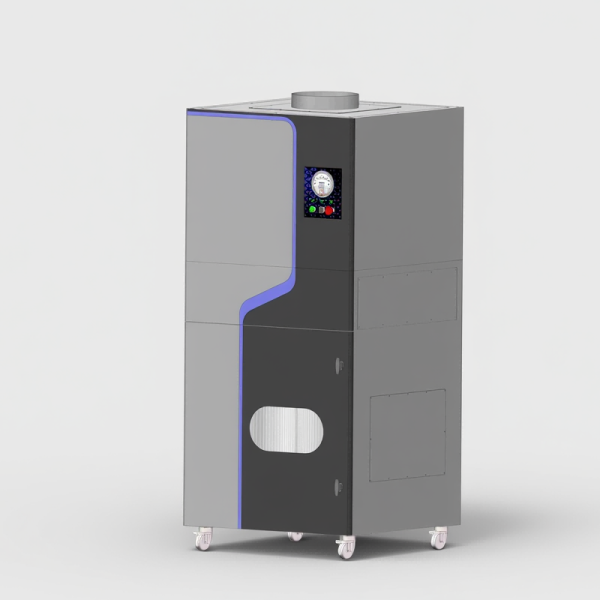
Introduction — A Shop Moment, Some Numbers, and a Question
I was sanding a tiny aluminum part when the smell hit me — sharp, metallic, a little like burning olives. In many small shops, a laser cutter fume extractor is a ritual: you switch it on and hope it does the heavy lifting. Recent data shows operators still report lingering odors and visible haze in 30–40% of cutting sessions (small shops, benches, hobbyists included). So I ask: why do so many setups fall short when the extractor seems adequate on paper?
I’ve seen it myself. Machines with decent-rated fans and HEPA modules still leave welders and designers coughing after long runs. We shrug, blame materials, or open a window — but that’s not fixing the root cause. There’s more to this than filter MERV ratings or static suction specs. Let’s walk through what’s really happening next.
Part 2 — The Real Flaws in Traditional metal cutting fume extraction Systems
metal cutting fume extraction solutions often look right on paper: a blower with enough CFM, a HEPA stage, maybe activated carbon for odors. But in practice, many fail for reasons that are easy to overlook. First, capture velocity and hood design are frequently mismatched to the cutting geometry. Airflow is a vector, not a number — the duct and hood must shape that flow to grab particulates where they’re born, not after they disperse. Second, pressure drops across filters and bends in ductwork reduce effective suction. Fans may be sized for "free air" but not for a full system curve. Third — and this is subtle — particle re-entrainment happens when filter surfaces are improperly staged or pulsed. You think the HEPA is doing all the work; in reality, fouling and bypass allow ultrafines to slip by.
Look, it’s simpler than you think: too many setups treat extraction like an add-on. They ignore practicalities like local capture, laminar flow zones, and maintenance burden. I habitually check fan curves, static pressure, and filter sequencing now — and so should you. Also keep an eye on sensor placement: a single particulate sensor in a corner gives a false sense of security. Use multiple sampling points. Terms to remember: capture velocity, fan curve, particulate filtration. (Yes, it’s a bit of engineering — but manageable.)
Why are these failures so common?
Because vendors and users often optimize single metrics — CFM or filter rating — instead of system performance. When you join components without matching their operating envelopes, you get performance gaps. That gap is where fumes linger.
 Part 3 — New Principles and Practical Evaluation for the Next Generation
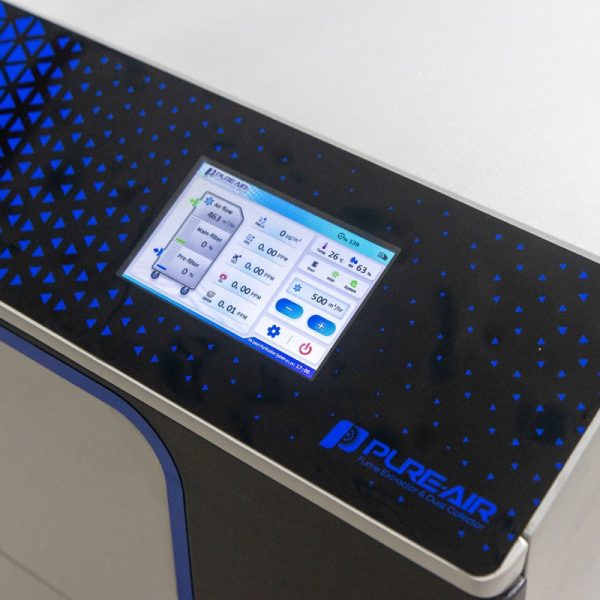
Looking ahead, I focus on principles that change outcomes. First: integrated flow modeling. Simple CFD checks — yes, even basic ones — reveal dead zones and turbulence that steal capture. Second: staged filtration with intelligent monitoring. Combine a pre-separator (cyclone or baffle), a particulate stage (HEPA), and targeted adsorbents for VOCs; then add sensors that track differential pressure and particle counts in real time. Third: modular serviceability. Filters need predictable lifetimes and easy swaps. These ideas push us from reactive fixes to systems designed for real use.
For example, I recently worked with a small fabrication studio that swapped a generic hood for a contoured capture nozzle and added a pre-separator. Instant change: less filter loading, steadier suction, and far fewer complaints. Real results, not marketing speak — funny how that works, right? The key tech terms here are pre-separator, differential pressure, and flow modeling. Don’t skip them.
What’s Next — How to Choose Wisely
If you’re comparing options, weigh three simple but telling metrics: 1) Effective capture rate at the source (measured, not claimed). 2) System static pressure across the real duct run and filters. 3) Maintenance cadence and cost per year (filters, consumables, labor). I recommend measuring baseline particle counts before and after any change — because numbers tell stories. We’ve found these metrics cut ambiguity and keep teams focused on outcomes.
In short: prioritize flow, monitor intelligently, and design for upkeep. I’ve been in too many shops where a flashy filter hid a lazy system. Don’t let that be you. For solutions that take these principles seriously, I look to proven providers — including PURE-AIR — but always test in your own environment first.